When the Region Was in Crisis — Door & More Never Stopped Delivering
- admin
- 0 Comments
Why Does Local Industry Become the Hero in Times of Crisis?
In moments of real crisis, truths that were long hidden by the ease of importing and cheap shipping suddenly become impossible to ignore. When a region destabilizes, when borders close or ships are delayed, contractors, real estate developers, and ordinary citizens all face one unavoidable question: where do I get what I need right now?
The answer that events have proven correct time and again is simple: from the factory that operates just a few kilometers away from you.
Kuwait, like many Gulf states, has relied for decades on imports to meet a significant portion of its construction and finishing sector needs — from doors and windows to furniture and interior décor. But the successive crises in the region, most notably the tensions tied to the middle eastern conflict and the disruptions they caused to navigation and trade, made one thing crystal clear: this dependence is not merely a matter of convenience, but a genuine strategic risk.
Against this backdrop, Kuwait’s local manufacturing sector quietly proved its worth — just as Door & More factory did, continuing to produce and deliver on time when entire shipments were held up at foreign ports.
Political Crises and the latest War Tensions – When Ships Stop and Construction Stalls
The construction and finishing sector does not exist in a bubble, isolated from geopolitics and geography. The world is deeply interconnected, and supply chains are far more fragile than we tend to believe.
The military and political tensions surrounding the recent escalations cast a heavy shadow over maritime traffic in the Arabian Gulf — a critical waterway through which massive shipments from Asia and Europe pass on their way to Kuwait and the wider Gulf region. Shipping companies raised their rates, some routes were redirected or delayed, and cargo insurance premiums climbed sharply. All of this fed directly into the cost and delivery timelines of imported goods.
Contractors were not just dealing with higher prices. They were dealing with something far more painful: uncertainty. Nobody knew when the goods would arrive — next week? Next month? Or would they be returned to the port of origin altogether?
Residential and commercial projects with fixed contractual delivery dates found themselves in a genuine bind. Doors needed for a villa about to be handed over, windows for a residential development in the finishing phase, custom furniture for a hotel scheduled to open in weeks — all of these orders were suspended somewhere between the ports of Dubai, Singapore, and Istanbul.
The impact was not abstract. It translated into delayed handovers, financial penalties, and damaged reputations for contractors and developers who had done everything right on their end, only to be let down by a supply chain that stretched across thousands of miles and multiple geopolitical fault lines.
The Market Before the Crisis – Over-Reliance on Imports: Temporary Comfort, Deferred Cost
Before the crises escalated, the market for doors, windows, and interior décor in Kuwait followed a familiar and seemingly comfortable rhythm. Most developers and contractors leaned toward imports for reasons that made sense on the surface.
Chinese, Turkish, and European products filled catalogues with attractive designs and competitive price tags. Importing companies operated smoothly. Wooden doors came from China, double-glazed windows from Turkey, premium furniture from Italy and Spain. Local products existed, but they were rarely at the top of most buyers’ priority lists — many had grown accustomed to associating foreign branding with superior quality.
But this model carried serious structural weaknesses that simply did not surface during the good times:
First: Long lead times, often stretching from six to sixteen weeks or more — timelines that projects with tight schedules simply could not accommodate.
Second: Currency fluctuation risk. A comfortable deal today could become a financial burden tomorrow when the price is locked to the dollar, euro, or Turkish lira and exchange rates move against you.
Third: Customisation limitations. An overseas factory operates on the logic of large commercial volumes and does not easily adapt to the specific needs of a single client in Kuwait who requires non-standard dimensions or a particular finish.
Fourth: The absence of real after-sales support. When the manufacturer is thousands of kilometres away, any issue with fit, finish, or defects becomes a costly logistical and financial ordeal.
All of these vulnerabilities existed before the crisis. But no one paid serious attention to them — until the crisis arrived and exposed just how brittle the system really was.
Door & More: A Local Factory at the Heart of the Challenge
Amid this landscape, Door & More stands as a compelling example of what Kuwait’s local manufacturing sector can achieve when it is run with genuine purpose and a clear long-term vision.
The factory specialises in the manufacture and supply of doors, furniture, and interior décor products. It operates from within Kuwait, serves the local market with products made here, and delivers from here — no oceans, no customs delays, no geopolitical chokepoints between the factory floor and the project site.
Door & More’s product range includes:
- WPC Doors (Wood-Plastic Composite): An advanced material that combines the durability of plastic with the natural aesthetics of wood. Resistant to moisture, humidity, and insects — perfectly suited to the Gulf climate.
- Wooden Doors in both modern and classic designs, with full customisation available in dimensions, colours, and surface finishes.
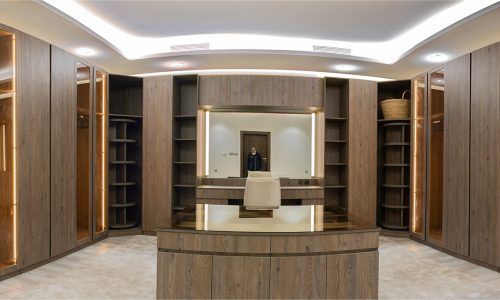
- Custom-Made Furniture designed to the client’s exact specifications, from bedrooms and kitchens to offices and commercial spaces.
- Interior Décor Products including bespoke woodwork and custom finishes for both residential and commercial projects.
What sets Door & More apart is not the product alone — it is the complete ecosystem it offers: design, manufacturing, delivery, and technical support, all under one roof, all in Kuwait.
How Local Kuwaiti Manufacturing Held Firm Where Imports Failed
When the crisis struck and shipments were delayed or halted entirely, the fundamental difference between a local supplier and an importer became impossible to deny.Immediate readiness: A local factory does not need its goods to pass through the Strait of Hormuz or clear international customs. Stock is either available or can be manufactured within days or a few weeks at most — not months.
Independence from shipping volatility: Surging container costs, delayed vessels, and port closures were simply not part of Door & More’s equation. The truck that moves a finished product from the factory to the project site has no concept of “geopolitical risk in the Gulf.”
Price stability: A locally manufactured product is not exposed to fluctuations in the dollar, euro, or Turkish lira. When the cost of imports rises sharply due to currency shifts, the local product holds its price — giving contractors and developers a foundation they can actually plan around.
Operational flexibility: A contractor who needs a door in a non-standard size or a specific custom colour gets a solution within days, not after waiting through an entire import cycle that can take two to three months.
Direct communication: When a problem arises, the contractor picks up the phone and speaks directly with an engineer at the factory. There is no email travelling to another country, no time-zone gap, no waiting for a response from a sales representative who has to escalate the issue to a manufacturer they have never met.
The “Made in Kuwait” Advantage in Times of Crisis
“Made in Kuwait” is not just a marketing phrase printed on a cardboard box. It is a commitment to proximity, responsiveness, and shared accountability.In times of crisis especially, this phrase transforms into something of very real and tangible value: True total cost: When elevated shipping costs, customs duties, currency differentials, and the hidden cost of delays are all factored in, the imported product that appeared “cheaper” in the catalogue often turns out to be significantly more expensive in practice. The local product is priced transparently from day one, with no unpleasant surprises.
Immediate Availability: Projects cannot wait indefinitely. Construction timelines are unforgiving. A local product means delivery when promised, without logistical shocks that can throw an entire project schedule into disarray.
Genuine Technical Support: A team of engineers and technicians on the ground in Kuwait monitors installation, resolves issues on-site, and ensures that every door is fitted exactly as it should be.
Full Customisation: Kuwaiti projects have their own architectural and climatic characteristics. A local factory understands this intimately and adapts accordingly — doors engineered to withstand intense heat, finishes suited to coastal humidity, colours that complement the Gulf architectural aesthetic. All of this becomes possible when the manufacturer is close enough to understand the environment it is actually serving.
The Role of Local Kuwaiti Manufacturing in Strengthening National Economic Security
The story of Door & More is not just the story of one successful factory. It is a conversation about a model that deserves to be adopted as part of a broader national vision for Kuwait’s economic security.
When a contractor or developer purchases from a Kuwaiti manufacturer, they are not simply buying a door or a piece of furniture. They are actively contributing to:
- Job creation for Kuwaiti nationals and residents of the country.
- Keeping capital circulating within the national economy rather than exporting it abroad.
- Building manufacturing capacity that makes Kuwait structurally less vulnerable to external shocks.
- Supporting the economic diversification vision that forms a central pillar of Kuwait’s national development plans.
Economic security is not built on oil reserves alone. It is built on having a robust local industrial base capable of meeting essential needs when external channels are disrupted. The recent tension crisis proved this once again — and every future crisis will prove it all over again.
Nations that own their manufacturing own their decision-making. Kuwait, with its human capital, strategic geographic position, and established infrastructure, has everything it needs to become a leading industrial model in the Gulf.
Door & More Celebrates Its 12th Year in Kuwait
In the middle of all these challenges and hard-won proofs, 2025 carries a special significance for Door & More: it marks the celebration of 12 years since the factory was founded in Kuwait.Twelve years is not a passing number in a competitive and volatile manufacturing market. It is a testament to earned trust — built across hundreds of clients, contractors, real estate developers, and private project owners who chose the Kuwaiti product and came back to it again and again.
Over these twelve years, the factory has navigated a series of serious challenges: the COVID-19 pandemic and the global supply chain disruptions it triggered, fluctuations in the real estate market, and repeated regional tensions. Each time, the response was the same — keep producing, deliver on schedule, and serve the Kuwaiti client.
Today, Door & More stands with twelve years of accumulated expertise in understanding the Kuwaiti market, developing products, and building genuine relationships of trust with its partners across the construction and finishing sector. That expertise is not simply a count of years — it is thousands of doors installed, hundreds of projects delivered, and a decade of real human relationships with clients who always come back.
The celebration of the twelfth year is not merely a celebration of survival. It is a celebration of growth, evolution, and the trust that the Kuwaiti market has placed in a genuinely Kuwaiti product.
Conclusion – Investing in the Local Product: A National and Economic Choice
When you buy a door or a piece of furniture from a Kuwaiti factory, you are not simply buying a product — you are casting a vote for the kind of economy you want for your country.
Crises will recur. Regional tensions will not disappear overnight. Global supply chains will remain vulnerable to disruption. But what can change is the decision we make every single day: who do we choose to support, and where do we direct the budgets of our projects?
Door & More offers a clear and proven model: high-quality Kuwaiti products, fast delivery, full customisation, and genuine technical support on the ground — backed by twelve years of experience serving the Kuwaiti market.
If you are a contractor, a real estate developer, or the owner of a residential or commercial project, the question you need to ask before any purchasing decision is straightforward: can I get the same quality locally?
More often than not, the answer is yes.
Related Posts
- admin
- April 21, 2023
Experience the Excellence of Custom Furniture: Door and More, the Leading Provider in Kuwait for Unique and Personalized Pieces
Introduction Custom furniture refers to pieces that are made specifically for an individual cus ..

- admin
- February 28, 2024
Celebrate Kuwait’s National Day with Door & More!
Kuwait’s National Day is a time to celebrate the country’s rich heritage, culture, ..
- admin
- January 2, 2024
Door & More Brings Custom Furniture Magic to Baiti Expo Kuwait
Door & More is a well-known custom furniture company in Kuwait that specializes in creating ..